

🇨🇦 Free shipping over $95 · $9.99 flat rate under
Russellville, Arkansas. Kitchen tools since 1994
A photo etching company that made woodworking rasps until a Canadian cook took one into the kitchen in 1994. Every tooth is etched rather than stamped, which is why it cuts zest instead of tearing it.
Shop Microplane
1967
Grace Manufacturing begins in Michigan
1994
The rasp becomes a zester
100%
Employee owned
Etched
Every tooth, never stamped
Grace Manufacturing was founded in Michigan in 1967 by Louis Grace and his father Richard, and for its first quarter century it had nothing to do with food. It made photo etched parts, including blades for printers, and then a woodworking rasp.
Microplane tells the moment it changed two different ways on two of its own websites, and both are worth having. On the consumer site: in 1994 a Canadian home cook, frustrated by a dull grater while making an orange cake, took one of her husband's woodworking tools out of his workshop. On the European corporate site, less romantically: in 1994 a woodworking catalogue in Toronto started marketing the rasps as food graters.
Either way the country is ours and the year is 1994, and nowhere does Microplane name her.
From Microplane's own history
Louis Grace and his father Richard open the business in Michigan.
The printer business moves to laser, and the company has to diversify.
The orange cake, or the Toronto catalogue, or both. The rasp becomes a kitchen tool.
Microplane names Julia Child and Martha Stewart among the early buyers.
Chris Grace joins the company.
European expansion begins.
Assembly moves to a Microplane owned factory in Mexico, a decision the company frames as keeping as many American jobs as it could.
Twenty five years of the kitchen brand.
This is the whole argument, and it is a real one. A conventional grater is stamped: a punch pushes through sheet metal and leaves a raised hole with a blunt lip. It tears.
Microplane uses photo etching, a chemical process that defines and sharpens the edge of every tooth. No punch touches it, so nothing is blunted in the making. The result cuts a shaving of parmesan or a curl of zest instead of shredding it, and it does that with almost no downward pressure.
They claim the process, not a patent: the original manufacturer of photo etched cutting tools, with more than fifty years of photochemical manufacturing behind it.
Two more things they say about themselves. The company is one hundred per cent employee owned through an ESOP. And on origin they are careful, so we will be too: the blades are made in the USA, and the tools are assembled in Mexico.
The Premium Classic zester is the one everyone means by a Microplane, and we stock it in most of the colours they make, from black and after dark grey through denim blue, cinnamon orange, eucalyptus green and lipstick pink.
The Gourmet series is the wider paddle, in fine, coarse, extra coarse, ultra coarse and ribbon, with a slider attachment that catches what you grate. Professional and Professional 2.0 for the heavier commercial version. Home and Elite and Black Sheep alongside them.
Then the box graters, the adjustable mandoline, the 3 in 1 ginger tool, a bar tool for cocktail garnish, the butter knife that shaves cold butter thin enough to spread, and cut resistant gloves in adult and child sizes.
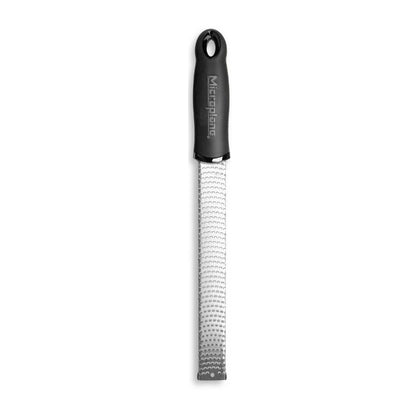
Microplane
$29.96
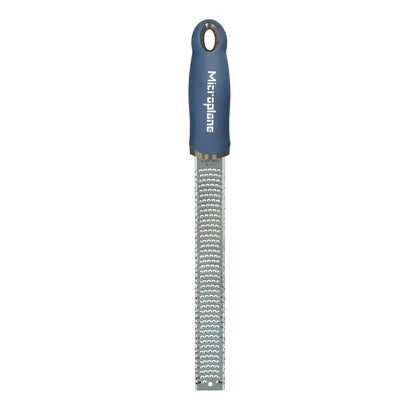
Microplane
$29.96
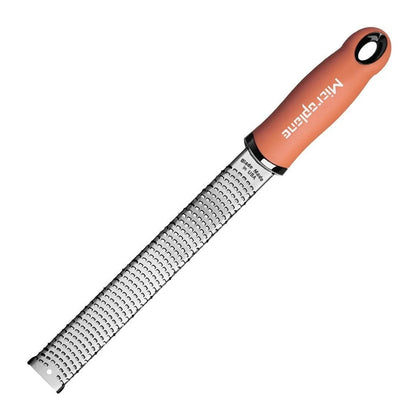
Microplane
$29.96
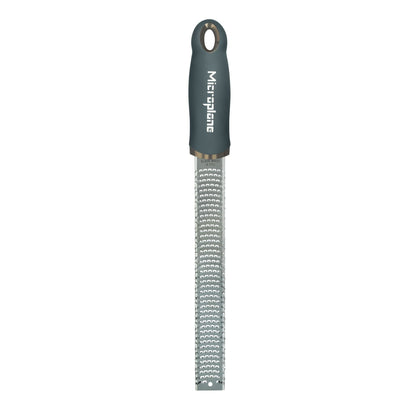
Microplane
$29.96
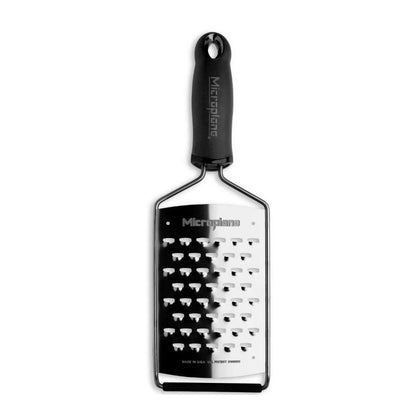
Microplane
$46.96
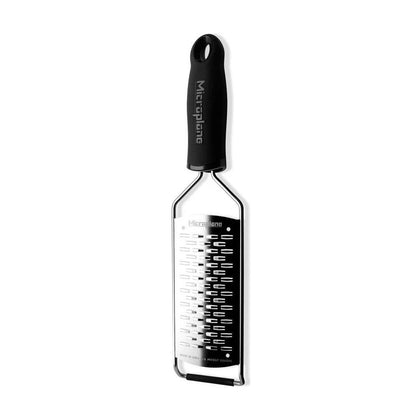
Microplane
$36.96
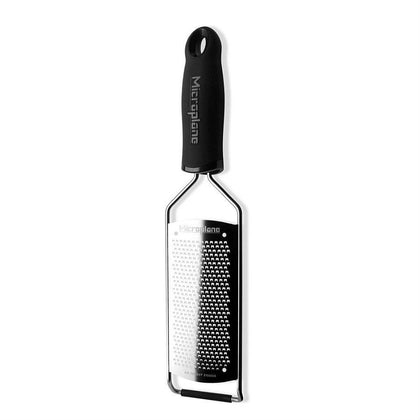
Microplane
$36.96
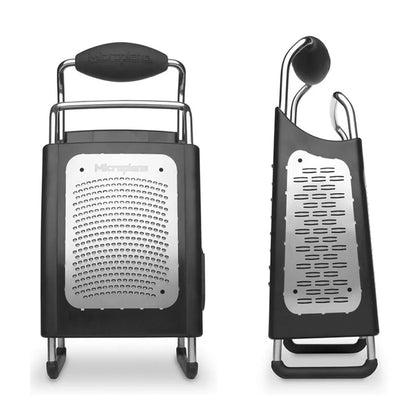
Microplane
$79.96
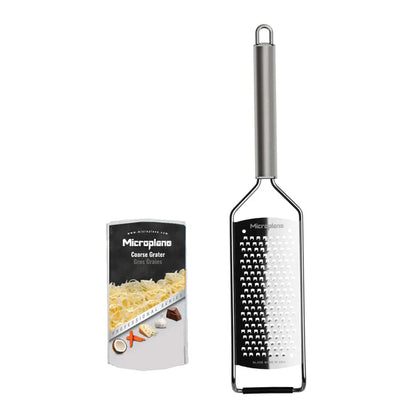
Microplane
$38.96
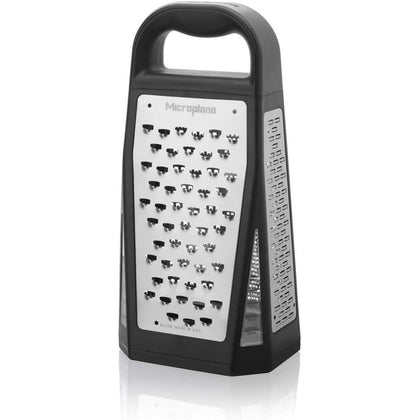
Microplane
$74.96

Email Us
sales@kitchenvirtue.com
No products were added to the Wishlist

[title]
[message]