

🇨🇦 Free shipping over $95 · $9.99 flat rate under
Sanjo, Niigata. Since 1874
A Sanjo bladesmith since 1874, incorporated in 1957 and making stainless knives ever since. What they put at the centre of their own story is the wet stone edge setting and the clamshell bevel it produces.
Shop Shimomura
1874
A bladesmith at Tajima in Sanjo
1957
Incorporated, stainless knives begin
VG10
Core in a three ply blade
Hamaguri
The clamshell edge they grind
Shimomura Kogyo puts its own history in one sentence: founded as a Sanjo bladesmith continuing from 1874, and incorporated in 1957. The forge was at Tajima, in Sanjo, and the company is still in Sanjo now.
Incorporation is where it becomes a modern manufacturer. Stainless knife production started the same year, 1957, and five years later a set of kitchen tools with a rose pattern on the handle sold well enough across Japan to put the company on the national map.
From Shimomura's own history
Founded as a bladesmith at Tajima in Sanjo.
Incorporated as Shimomura Kogyo. Stainless knife production begins.
Kitchen tools with a rose patterned handle become a national hit.
Ceramic blade production begins.
Shimomura Hong Kong opens.
Verdun launches: an all stainless, one piece knife series with no join between blade and handle.
The Un-Ryu damascus series arrives.
Fulvege and Pro Grade kitchen tools.
Murato launches.
The thing Shimomura puts at the centre of its own explanation is not the steel. It is the edge setting, done by Tsubame-Sanjo craftsmen by the traditional wet stone method they call mizu-togi ha-tsuke.
What it produces is a hamaguri edge, named for a clam: convex rather than flat, with a wide mirror finished bevel. The practical difference is that food releases off a curved bevel instead of sticking to a flat one, so there is less resistance through a dense carrot, and the geometry is easy to bring back on a stone at home.
The Murato blades are three ply, with a VG10 core clad in softer stainless, an 18-8 bolster and a laminated reinforced wood handle. The name is theirs to explain and they do: the mura of Shimomura, and to, a unit of measure, a standard.
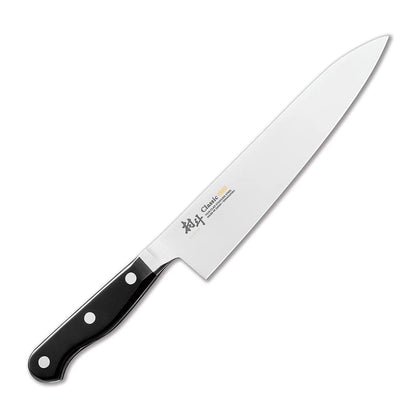
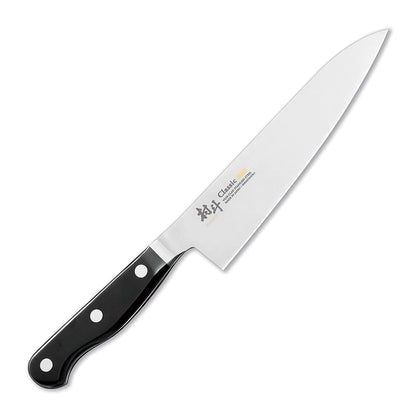
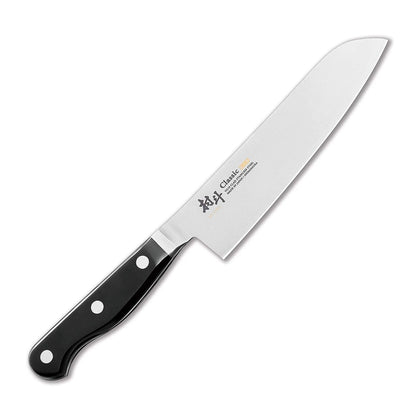
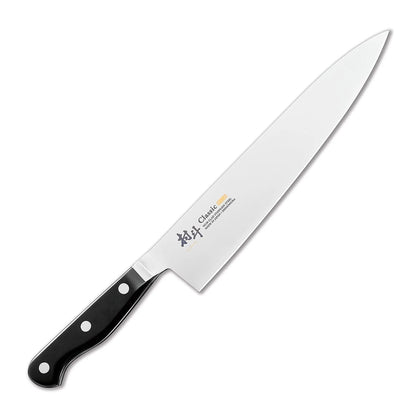
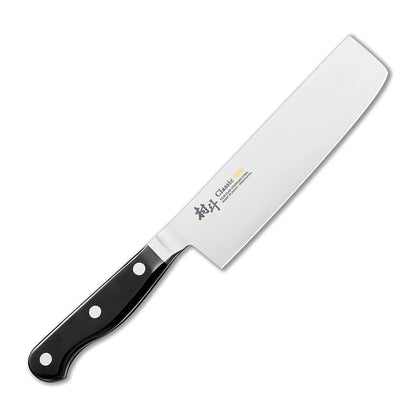
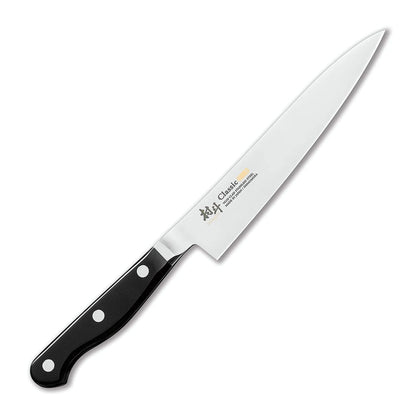
The Murato Classic range in VG10, which is most of a working kitchen: chef's knives at 7, 8.2, 9.5 and 10.6 inches, santoku at 6.7, nakiri at 6.5, petty at 4.9 and 5.9, and slicers at 9.5 and 10.6.
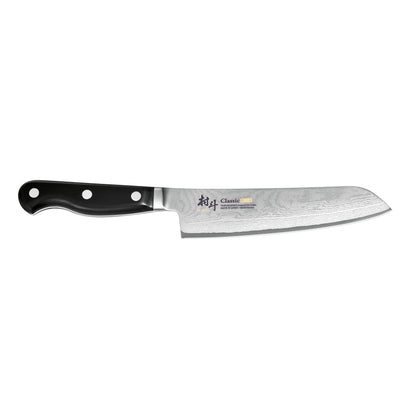
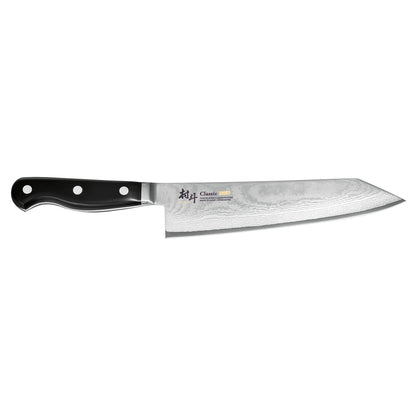
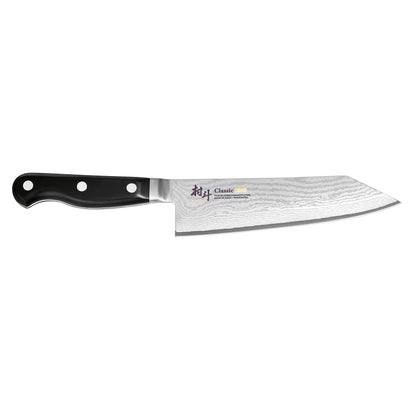
Above them the 33 layer damascus Murato, in a santoku and in the kengata shape, a reverse tanto profile with a straight spine that drops to the tip. It is the most useful looking knife in the range and also the most photographed.
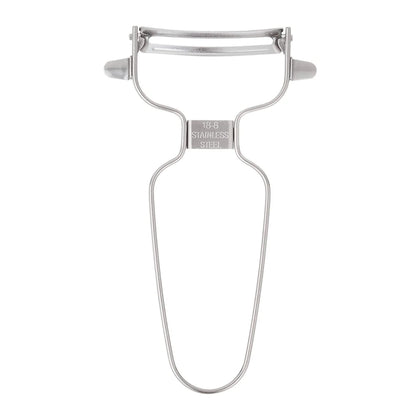
And two small tools from the Ajiwai line that do one job properly: a stainless peeler and a corn stripper.
Shimomura
$104.91
Shimomura
$84.91
Shimomura
$84.91
Shimomura
$124.91
Shimomura
$169.91
Shimomura
$209.91
Shimomura
$169.91
Shimomura
$84.91
Shimomura
$69.91
Shimomura
$14.95

Email Us
sales@kitchenvirtue.com
No products were added to the Wishlist

[title]
[message]