

🇨🇦 Free shipping over $95 · $9.99 flat rate under
Nara, Japan. Since 1870
A shop at the foot of Wakakusayama in Nara that sold swords until the Meiji edict made that impossible, then turned to kitchen knives and razors in 1889. The chrysanthemum mark is still stamped on every blade.
Shop Kikuichi
1870
The shop opens in Nara
1889
Swords give way to kitchen knives
1921
The Kikuichi marks registered
1997
A New York company opens
The full name is Kikuichi Monjushiro Kanenaga, and the company's own Japanese corporate page dates the shop to 1870. Its English site says 1868. We are going with the Japanese record and noting the difference rather than picking the more flattering number.
The older story is the one Kikuichi tells about where its technique comes from, and it is worth quoting their hedge exactly. They say the house is in the stream of the Tegai school, one of the five Yamato schools of swordsmiths, whose smith Kanenaga worked by the west gate of Todai-ji in what is now Kanenaga-cho in Nara. That is a claim of inheritance, not of corporate continuity. The seven hundred and fifty years belong to the school.
The chrysanthemum is handled the same careful way. Kikuichi says the name is said to originate in the Kanei era, between 1624 and 1638, when a chrysanthemum crest granted by the Imperial House began to be used as a stamp on blades. What is not in doubt is the present tense: the mark is on their knives today.
From Kikuichi's own history
Kikuichi Monjushiro Kanenaga is founded. The shop appears in a contemporary guide to the merchants of Yamato.
The Sword Abolishment Edict is promulgated.
The shop moves to its present site at the foot of Wakakusayama and shifts to making and selling kitchen knives and razors.
The Kikuichi marks are registered as trademarks.
The main store receives the British Prince of Wales, later Edward VIII, and Crown Prince Hirohito.
The company is incorporated and the store rebuilt.
The store is destroyed by fire and reopens the same October.
Kikuichi New York is established.
A Kanenaga tachi is shown in Art of the Samurai at the Metropolitan Museum of Art.
A sharpening workshop is built at the shop and a knife sharpening session opens to the public. Name engraving follows in 2022.
Kikuichi's English material describes the knives as made guild style, with bladesmiths, sharpening masters, handle makers and finishing experts, and says a minimum of four master craftsmen work on every knife. The Japanese side says less and says it more plainly: forged by hand, checked one at a time.
On steel their Japanese material names no grade and gives no hardness figure. It says only wagane, blade steel selected by history. The series names on the shelf do the specifying instead, and that is how we treat them: Elite Carbon, Semi Stainless, Molybdenum Stainless, Swedish Stainless, Ginsan Nashiji, Kurouchi, and the several Warikomi Damascus patterns.
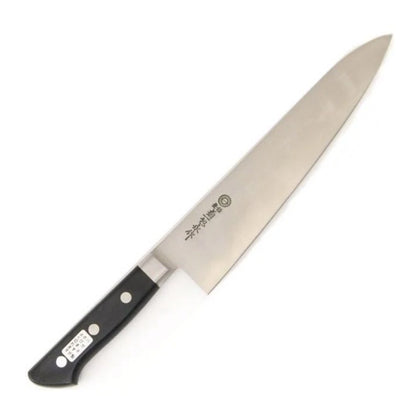
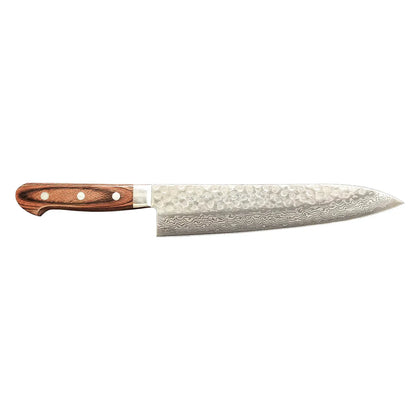
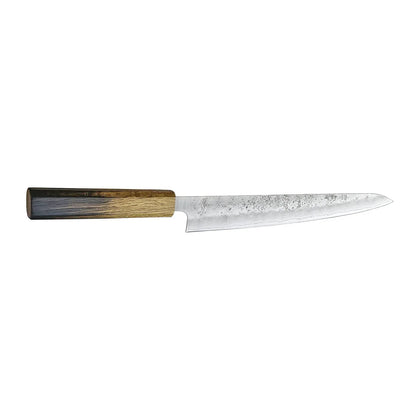
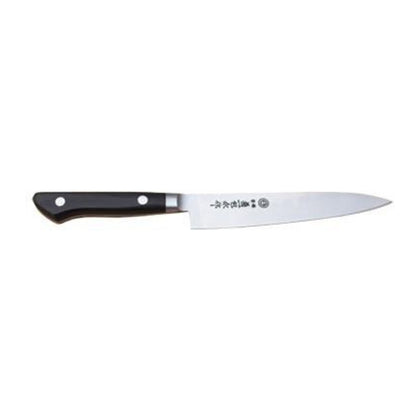
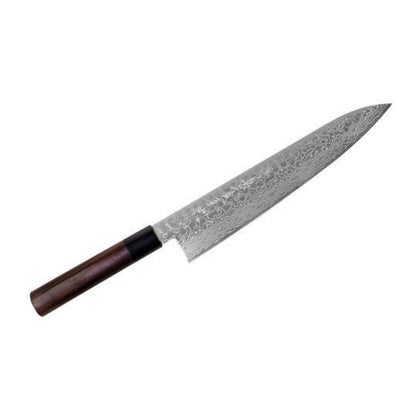
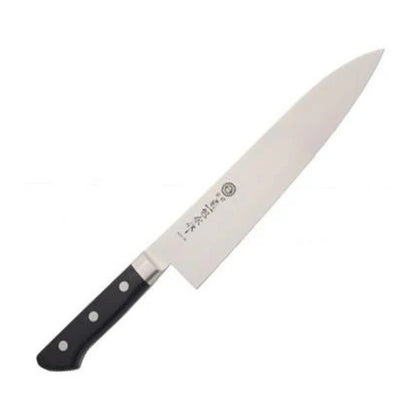
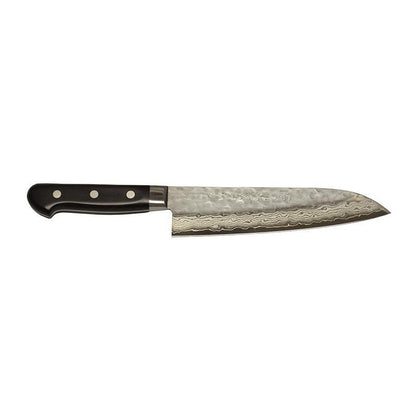
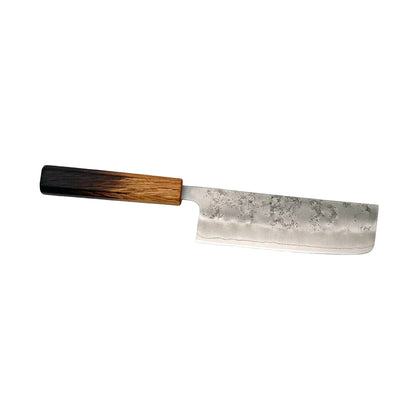
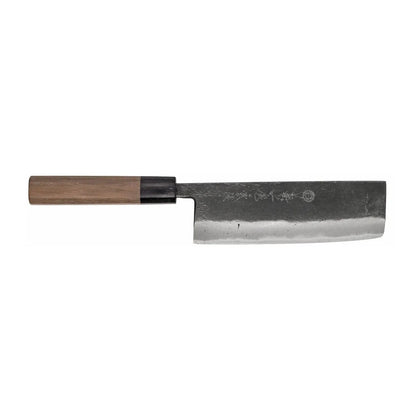
The deepest brand range on the site, and it runs from a 3.5 inch paring knife to a 9.5 inch gyuto in nearly every steel they make.
Warikomi Damascus in nickel and Swedish steel and in hammered tsuchime finish, across gyuto, santoku, nakiri, usuba, utility and paring. Elite Carbon in gyuto and petty. Ginsan Nashiji with oak handles. Kurouchi carbon clad with the forge scale left on. Molybdenum and Swedish stainless for anyone who would rather not think about a carbon blade at all.
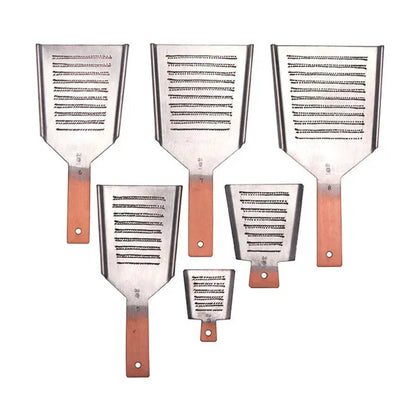
And then the thing nobody expects from a knife maker: hand hammered tinned copper oroshigane graters, coarse on one face and fine on the other, from a three inch mini up to a 13.5 inch No. 10. For wasabi, ginger, turmeric and daikon, and for nutmeg and cinnamon at the fine end.
Kikuichi
$239.96
Kikuichi
$479.95
Kikuichi
$464.95
Kikuichi
$144.95
Kikuichi
$619.95
Kikuichi
$269.95
Kikuichi
$424.95
Kikuichi
$399.95
Kikuichi
$369.95
Kikuichi
$249.95

Email Us
sales@kitchenvirtue.com
No products were added to the Wishlist

[title]
[message]