

🇨🇦 Free shipping over $95 · $9.99 flat rate under
Tsubame, Niigata. Since 1960
A Tsubame press shop since 1960 that kept every step under one roof, from die design to packing. Geo Product is their seven layer stainless line, with a lid that seals tightly enough to cook without added water.
Shop Miyazaki Seisakusho
1960
Founded as Miyazaki Press
7
Layers, full wall to rim
1996
Geo Product launches
1
Factory, die design to packing
Miyazaki Seisakusho started in 1960 as Miyazaki Press, in Tsubame, which is the town that stamps and polishes most of Japan's stainless steel. Three years later came the Three Bird brand and a small fork, and from there tableware, then pots, then the pans the company is known for now.
What sets them apart in a town full of press shops is that they kept the whole process in one building. Their own description is a list: die design, pressing, polishing, inspection and packing, all in the same factory.
From the company's own history
Founded as Miyazaki Press.
The Three Bird brand begins, with the Hime fork.
Pots and kettles developed for the department stores under the Cooking Stainless name.
Three Bird is renamed Miyaco.
The Miyaco Objet series launches. It is still in the range.
A series with the Italian designer Paolo Segota.
A series with the French designer Luciano Fornelis.
Geo Product launches, with the food educator Yukio Hattori as supervisor.
The Ricepot rice cooking pan.
Miyacoffee. Chaki, the tea range, follows in 2017.
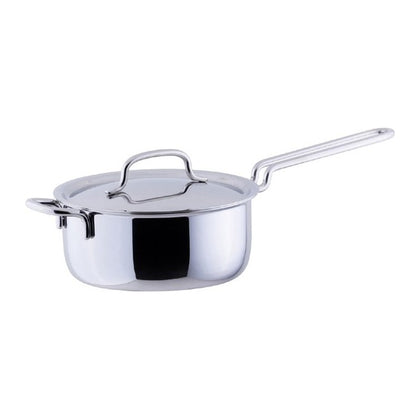
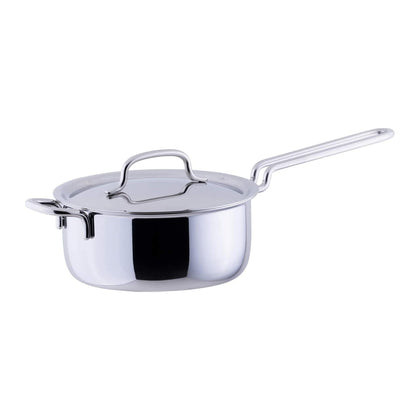
Geo Product is built as a full seven layer construction, meaning the layers run all the way up the wall rather than stopping at a disc in the base. Stainless outside for durability, aluminium inside for conduction, so the side of the pan is as hot as the bottom of it.
The lid is the other half of the design. It seats against the rim closely enough to form what Miyazaki calls a water seal, holding the inside of the pan at a steady temperature and pressure. That is what makes their waterless and residual heat cooking work, and why they will tell you that you can bake a cake in one. It is made by hand in Japan.
Their older Objet series, still going since 1982, is the three ply one: an iron core for pans that simmer, an aluminium core for pans that fry.
The Geo Product range in the sizes that get used: saucepans at 14, 16, 18 and 20cm, saute pans at 21 and 25cm, and the wide mouth 2.5L kettle.
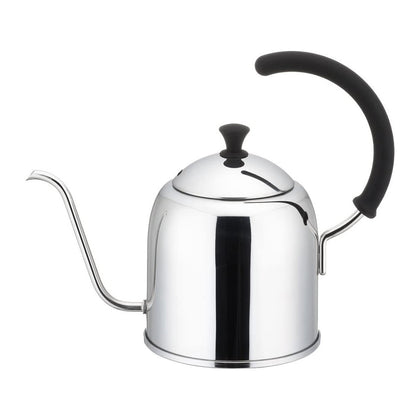
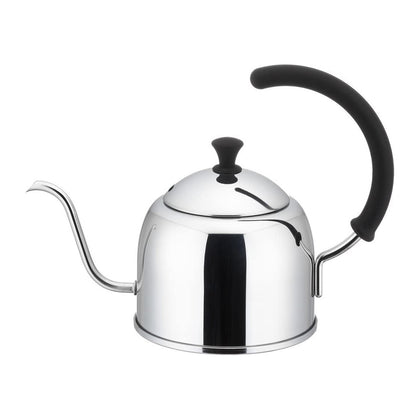
Miyacoffee, which is a drip kettle in mirror finish at 0.9L and 1.2L with the narrow gooseneck that lets you pour slowly enough to matter, plus a single cup drip pot.
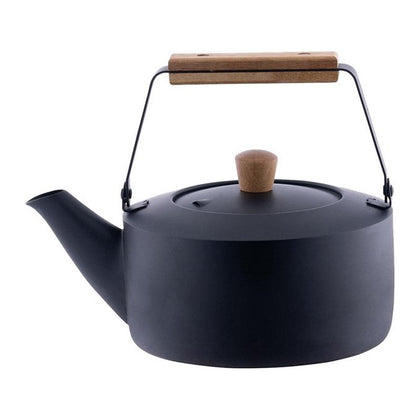
Chaki, the tea range: a 1.5L kettle in black, a teapot with a built in strainer, and tea canisters in a black kuroiro finish and a rougher zarame one.
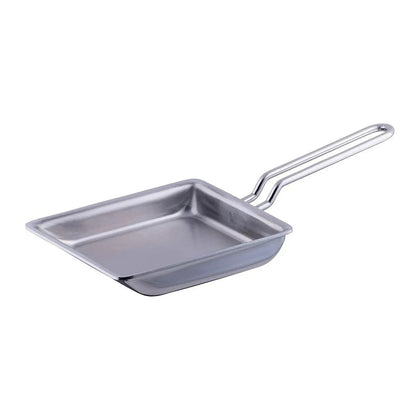
And a few pieces from the older Three Birds line that never needed replacing, including the citrus reamers and the little gravy boat, plus a stainless tamagoyaki pan for rolled omelette.
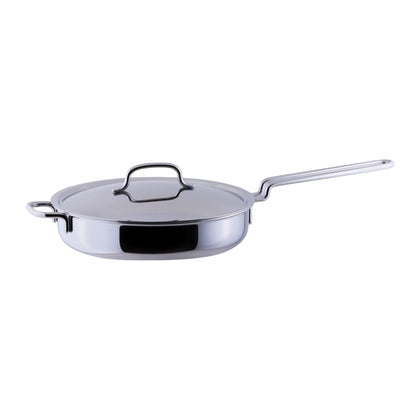
Miyazaki Seisakusho
$199.96
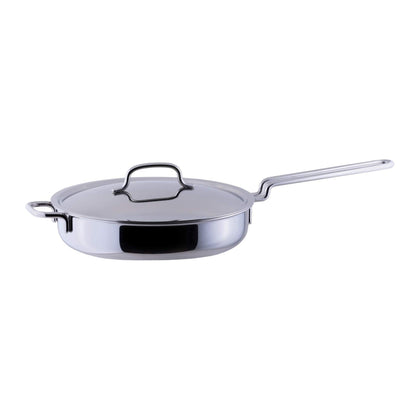
Miyazaki Seisakusho
$179.96
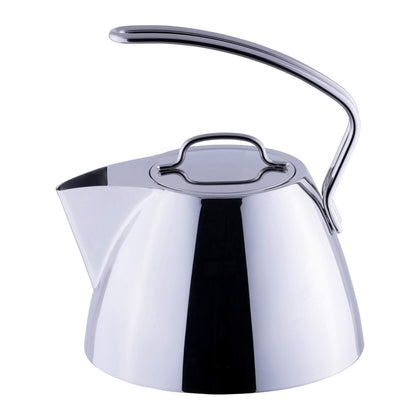
Miyazaki Seisakusho
$209.96
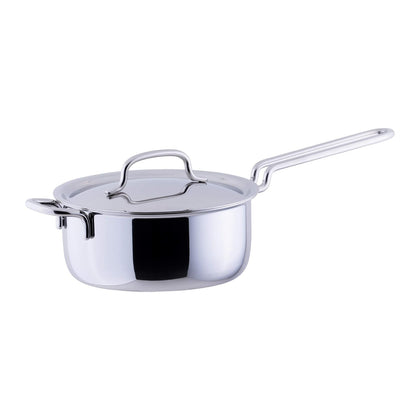
Miyazaki Seisakusho
$169.96
Miyazaki Seisakusho
$159.96
Miyazaki Seisakusho
$149.96
Miyazaki Seisakusho
$94.96
Miyazaki Seisakusho
$79.96
Miyazaki Seisakusho
$129.96
Miyazaki Seisakusho
$98.95

Email Us
sales@kitchenvirtue.com
No products were added to the Wishlist

[title]
[message]