

🇨🇦 Free shipping over $95 · $9.99 flat rate under
Seki, Gifu. Since 1918
A Seki knife maker founded in 1918 by a descendant of the swordsmith Kanetsugu, still run by the same family and still nineteen people. Two things they claim as their own: the sword's clamshell edge, and a quench that goes below minus seventy.
Shop Seki Kanetsugu
1918
Kawamura Matsujiro opens the shop
-70C
The blade goes below it after quenching
19
People make everything
Hamaguri
The sword's edge on a kitchen knife
Kanetsugu is a swordsmith's name. The company's own history opens not with a business but with a smith: the first Kanetsugu worked in the Nanbokucho period, in the fourteenth century, and is said to have been the son or the pupil of Shizu Saburo Kaneuji, who himself studied under Masamune and is counted among his ten disciples. The name runs down through Seki blades for six hundred years after that.
The company is younger and precise about it. In 1918 Kawamura Matsujiro, whom their own page describes as a descendant of the swordsmith Kanetsugu, opened a blade making business in Seki. It incorporated in 1949 with Matsujiro as first president. It is on its fourth, Kawamura Yosuke, and it employs nineteen people.
From Seki Kanetsugu's own history
The first Kanetsugu works in the Nanbokucho period, in the line of Shizu Saburo Kaneuji.
Blades signed Zenjo Fujiwara Kanetsugu.
Kawamura Matsujiro opens a blade making business in Seki.
Chubu Token is established and Japanese swords are made.
Seki Kanetsugu Hamono is incorporated, with Matsujiro as its first president.
Kawamura Narikatsu becomes second president. Kawamura Mitsuyasu follows in 1994.
The factory is extended, with a new office block in 2016 and a further extension in 2017.
Kawamura Yosuke becomes fourth president.
Two things Seki Kanetsugu puts forward as their own, and both are checkable claims rather than adjectives.
The first is the hamaguri edge: they took the clamshell blade geometry particular to the Japanese sword and put it on a kitchen knife. Convex, not flat, so food releases instead of clinging.
The second is sub zero treatment. After quenching, the blade is taken below minus seventy degrees. Their stated reason is the Seki standard for a sword, which they quote as three things: it does not break, it does not bend, it cuts well. Hardness and toughness are usually a trade, and the deep freeze is how they buy a little of both.
Alongside that, a micro serration they call micro dent, ground so the knife is sharpened from the reverse side only, and CNC grinding that controls blade thickness to a hundredth of a millimetre before a person sets the edge by hand under running water so the steel never gets hot enough to soften.
Three lines, and they sit at different places.
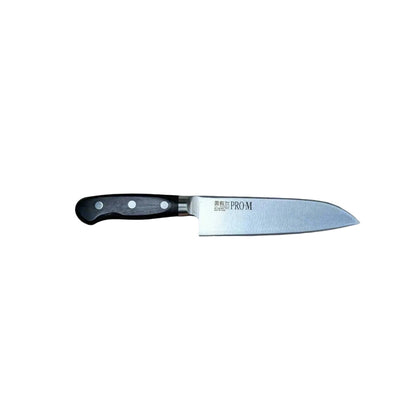
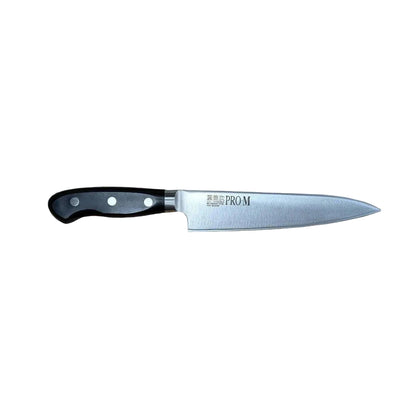
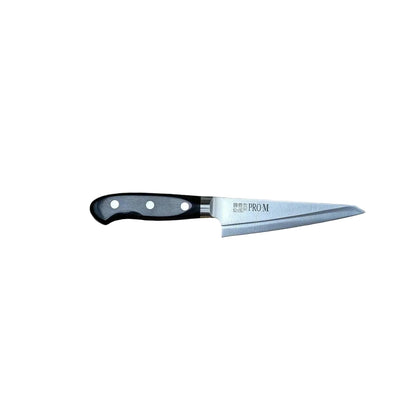
Pro-M is the working line: a molybdenum stainless blade, a one piece bolster with no gap to trap anything, a black laminated wood handle, and 18-8 stainless for the metal inside the handle, which is the part that usually rots first on a wood handled knife. Chef's knives at 7.1, 8.2 and 9.4 inches, a santoku, utility knives at 5.1 and 5.9, and a boning knife.
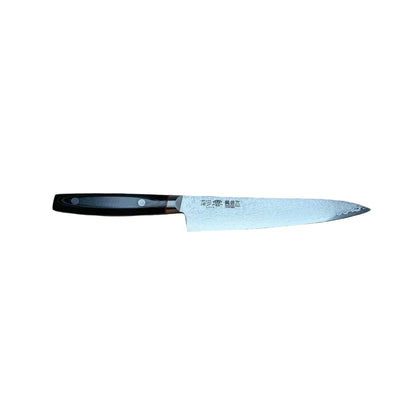
Saiun is the VG-10 damascus line with micarta handles: paring, utility at 4.7 and 5.9, and chef's knives at 7.9 and 9.0 inches.
Zuiun is the top of the range, damascus over a powdered steel core: petty, santoku, gyuto and a 9.4 inch sujihiki.
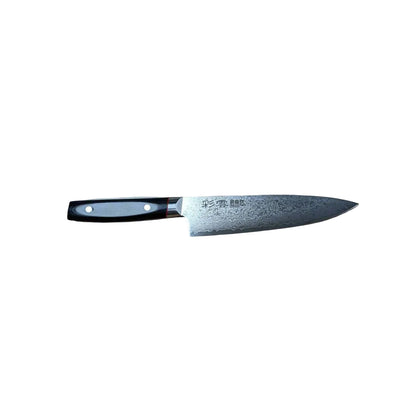
Seki Kanetsugu
$169.98
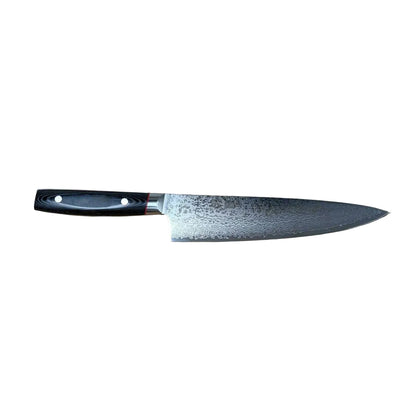
Seki Kanetsugu
$189.98
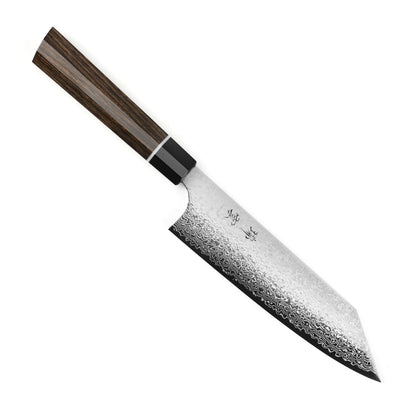
Seki Kanetsugu
$329.98
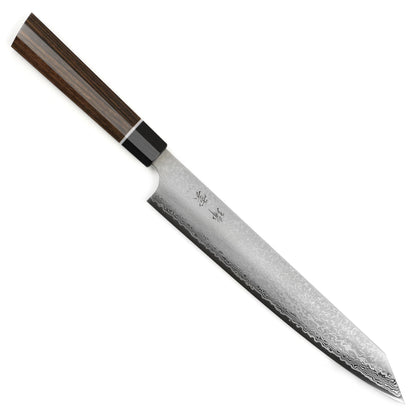
Seki Kanetsugu
$379.98
Seki Kanetsugu
$79.98
Seki Kanetsugu
$79.98
Seki Kanetsugu
$84.98
Seki Kanetsugu
$104.98
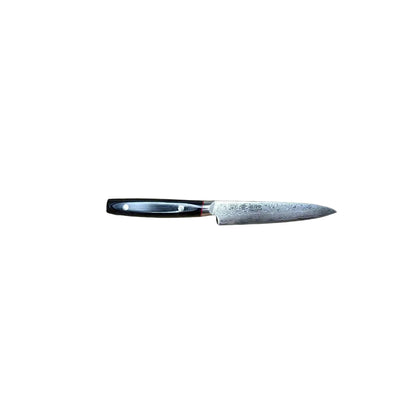
Seki Kanetsugu
$98.98
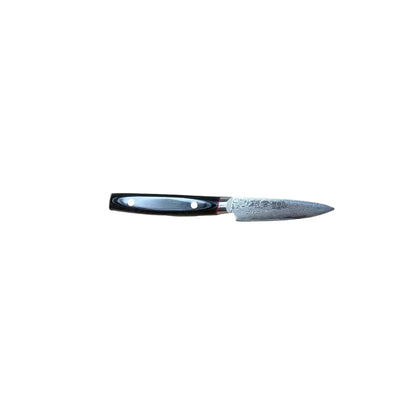
Seki Kanetsugu
$98.98

Email Us
sales@kitchenvirtue.com
No products were added to the Wishlist

[title]
[message]