

🇨🇦 Free shipping over $95 · $9.99 flat rate under
Alsace, France. Since 1974
In 1974 Francis Staub designed a cast iron cocotte in Alsace, the corner of France that cooks in one pot for hours. The lid rains condensation back over the food as it cooks, and the black enamel inside sears like nothing else.
Shop Staub
1974
The first cocotte, designed in Alsace
Black
Matte enamel inside, made for searing
260°C
Oven safe, lid and all
None
Seasoning needed, ever
Alsace sits on the far eastern edge of France, a long valley of vineyards and half-timbered villages pressed up against the Rhine. It is a place that takes its food seriously and its pots more seriously still. Choucroute, baeckeoffe, stews that go into the oven in the morning and come out at dusk. One pot, a long time, a table full of people.
In 1974 an Alsatian named Francis Staub sat down to design the pot for all of that. Cast iron for the way it holds heat. Enamel so it never needs seasoning. A heavy lid that fits like it was ground to the rim. He called it a cocotte, and it is still the thing Staub makes best.
The stork in the Staub mark is the stork of Alsace, the bird that comes back to nest on the village chimneys every spring.
Turn a Staub lid over and you will find it covered in small raised points.
They are the whole idea. As a braise simmers, steam rises, hits the heavy cast iron lid, cools and condenses. On an ordinary lid that water runs off to the sides. On a Staub it gathers on those points and falls straight back down, evenly, across everything in the pot, for as long as it cooks. A gentle, continuous rain. The meat bastes itself. The vegetables stay tender. Nothing dries out at the edges.
On the French oven the points are swept into curves, shaped after the wicker chistera that Basque pelota players use to catch and throw the ball. The curves gather the moisture and send it down even more evenly over the whole dish.
Look into a Staub and the inside is black. Not a cream glaze, but a textured, matte black enamel.
It is there for browning. The slight texture gives meat something to grip, so it sears hard and builds a proper crust, and the fond it leaves behind is the start of every good sauce. It hides the stains a pale enamel shows, and it never needs oil rubbed into it. Wash it and put it away.
Under the enamel is cast iron, and cast iron is patient. It comes up to heat slowly and then holds it, evenly, top to bottom, on gas, electric, glass or induction, and in the oven, lid and all, to 260°C. Then it goes to the table, because a Staub is meant to be seen.
All of it in matte black, the classic Staub finish.
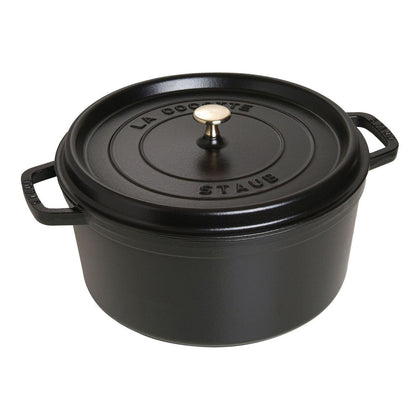
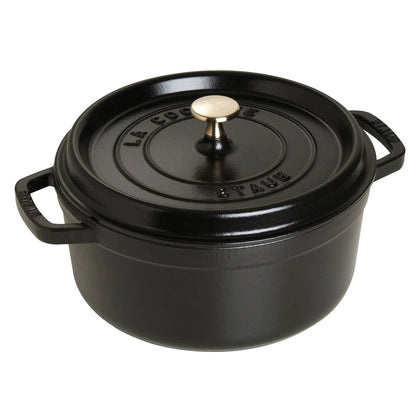
The round cocotte, the original, at 3.8, 5.25, 6.75 and 8.4 litres. The 5.25 is the everyday size for a family. The 6.75 is the one for Sunday, for a whole chicken or short ribs for six.
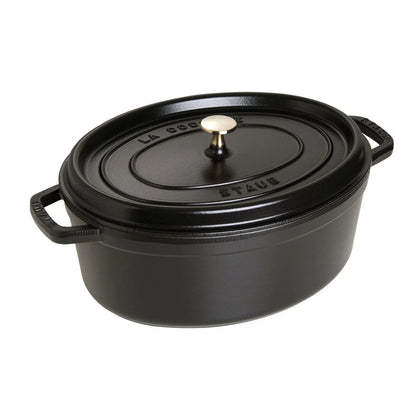
The oval cocotte at 4.25, 5.5, 6.75 and 8 litres, shaped for the things that are long rather than round: a leg of lamb, a pork shoulder, a whole fish.
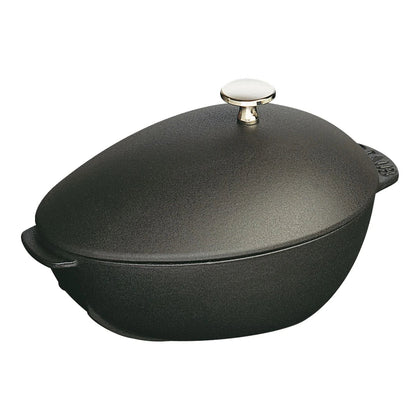
The French oven at 3.6 litres, with the curved chistera lid and a rounded base that is easy to stir into. The mussel pot, with a deep lid that turns over to hold the empty shells. And the mini cocotte, at a quarter of a litre, for a single serving of anything baked, to bring straight from the oven to the plate.
Staub is part of the Zwilling family, alongside Miyabi. Hand wash for the best long life, let it cool before it meets cold water, and it will be cooking for whoever inherits it.
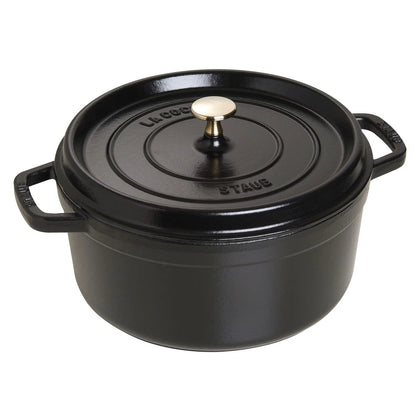
Staub
$459.97
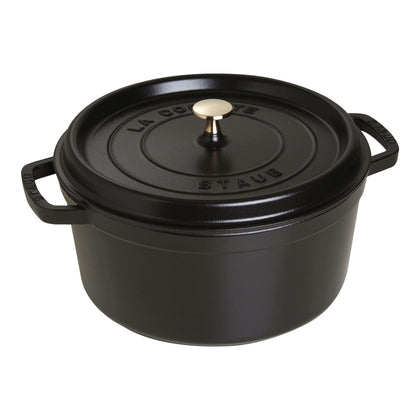
Staub
$519.97
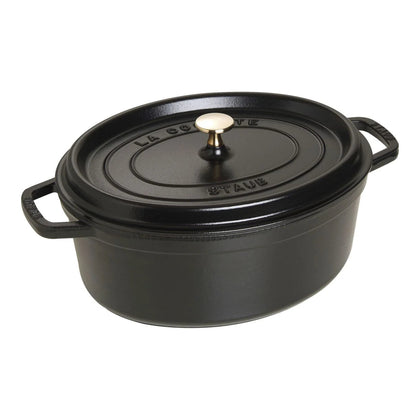
Staub
$479.97
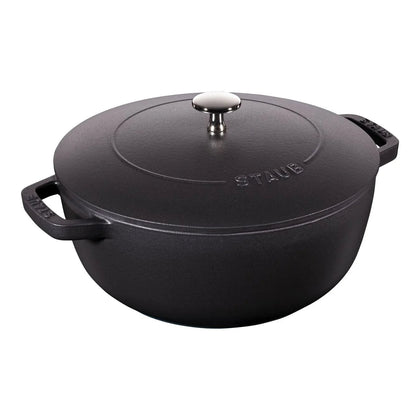
Staub
$329.97
Staub
$589.97
Staub
$549.97
Staub
$279.97
Staub
$399.97
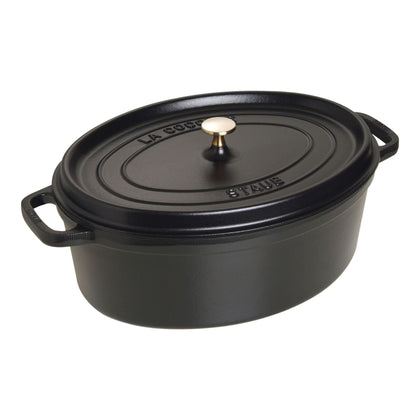
Staub
$599.97
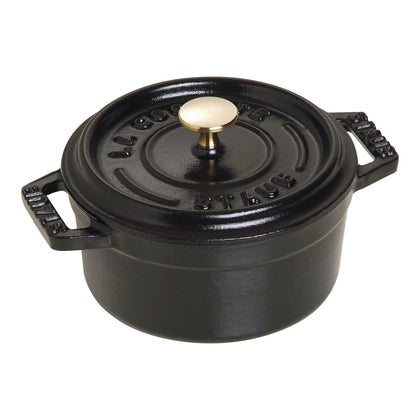
Staub
$124.97

Email Us
sales@kitchenvirtue.com
No products were added to the Wishlist

[title]
[message]