

🇨🇦 Free shipping over $95 · $9.99 flat rate under
Medellin, Colombia. Since 1939
Raul Mejia was sixteen when he walked into the foundry trade in Medellin in 1939, casting iron soldiers by hand. He loved to cook, so he designed a grain mill, and everything followed from there. Three generations on, the family still pours its own iron on the same ground.
Shop Victoria
1939
A sixteen year old and a furnace
3rd
Generation, same family
100%
Flaxseed oil on every pan
38
Countries, out of one foundry
Raul Mejia was sixteen years old when he walked into the foundry trade, in a city in the mountains of Antioquia, in 1939. What he made at first were iron soldiers. Cast by hand, one at a time, a boy and a furnace and a lot of afternoons.
What changed everything is that he loved to cook.
The first thing Raul ever designed for a kitchen was a grain mill, and Victoria will tell you flatly that the mill is the foundation of everything the company became. The pans came later, in 1974, and for an unromantic reason: somebody in the United States wanted good cast iron, and a foundry in Medellin already knew how to pour it.
Three generations later the family is still there, and the iron is still poured in the same neighbourhood the boy started in.
Three generations
Raul Mejia, sixteen, enters the foundry trade in Medellin, making iron soldiers by hand.
The first export. Grain mills to El Salvador, and shortly after to Guatemala.
Pans and griddles enter the range.
Andres Felipe Mejia, Raul's son, takes over.
The first pans reach Europe, into Spain.
A new moulding line and a rebuilt factory. Manuel Mejia, Raul's grandson, comes in to lead the brand.
More than eighty products, going out to over thirty eight countries.
Victoria cast all of their own iron, in house, in Medellin. That sounds like a detail and it is not, because owning the furnace means controlling exactly what goes into it.
What goes in is virgin cold rolled steel, with reclaimed virgin steel alongside it, and every offcut from inside the plant goes back into the melt rather than out the gate. Nothing unknown ever enters the pour. They have their own name for what comes out of it, spherrous iron, and they have spent eighty years refining it on the same piece of ground.
Ask most cast iron companies what they season with and you will get the words “vegetable oil” and a change of subject.
Victoria season every pan with one hundred per cent flaxseed oil. Kosher certified, non GMO, and chosen because their own testing found it laid down a harder, tougher base than anything else they tried.
Flaxseed does something the others do not. Under heat it stops behaving like an oil and starts behaving like a varnish, polymerising into the surface of the iron rather than sitting on top of it. That is the dark, faintly glassy skin on a new Victoria, and it is why one arrives ready to cook in rather than ready to be seasoned.
One piece of advice from them worth taking, because almost nobody else tells you: do not keep seasoning with flaxseed. Lay down too many coats of it and it can flake. For everyday upkeep they point you at coconut oil, ordinary vegetable oil or shortening. A hard base from one, a lifetime of maintenance from another.
This is where Victoria stops looking like every other cast iron brand on the shelf.
The comal is a thin, flat, round griddle, and across Colombia and Mexico it is the most used pan in the house. Tortillas and arepas. Toasting chillies and whole spices until the kitchen smells of them. Blistering peppers. Crepes, if you want. Nothing with a wall on it does that job half as well.
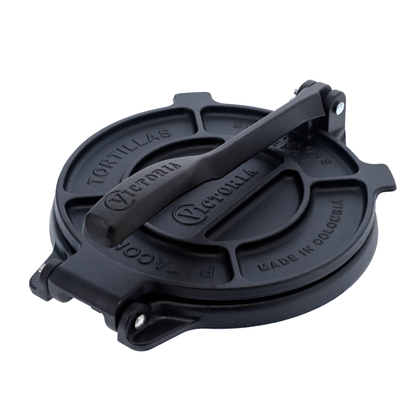
The tortilla press is solid cast iron, and it is also a pataconera, which is the tool for crushing fried green plantain flat before it goes back into the oil to become patacones. It presses harder and flatter than any wooden one, and it will still be in the family in fifty years.
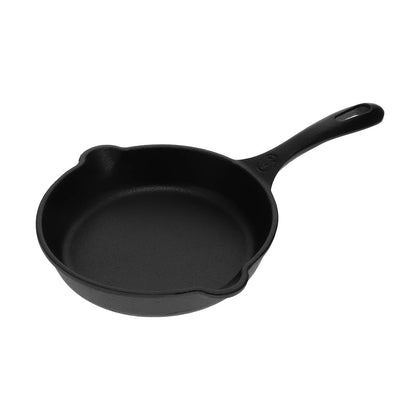
Skillets at 6.5, 8, 10 and 12 inches, plus the mini skillets and a fajita skillet that comes on its own wooden base, still spitting.
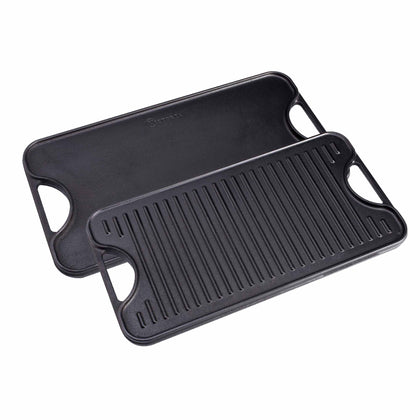
The flat things: the 10.5 inch comal, reversible griddles at 13 and 18.5 inches, a 15 inch pizza pan, and the tortilla press.
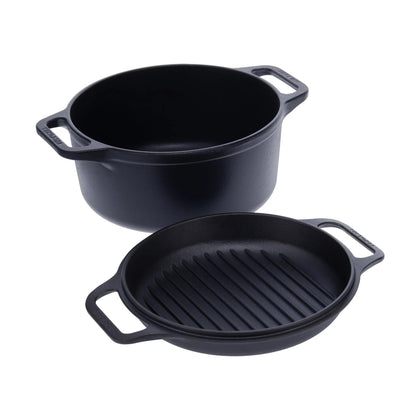
Dutch ovens at 3.8L and 6.6L, and the 5.7L combo cooker, whose lid lifts off and becomes a skillet in its own right.
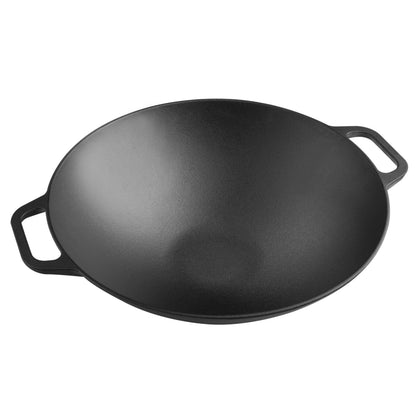
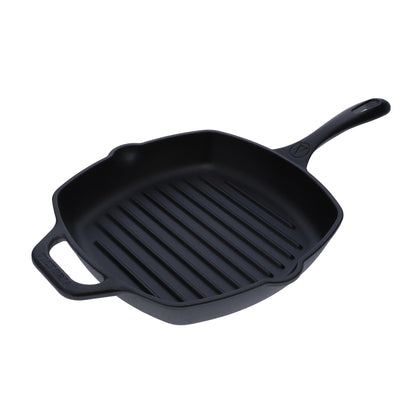
A 14 inch wok. A square grill pan. Saucepans down to a 0.4L butter warmer. Mini cocottes and oval bakers for the oven to table run. Bacon presses with wire and with wood handles. A panini press.
And the two things that keep all of it alive: a chainmail scrubber, and silicone sleeves for when the handle is hotter than you are.
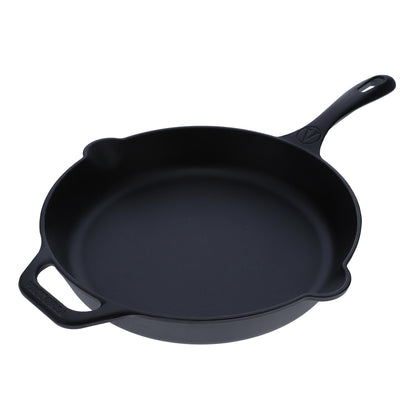
Victoria
$59.97
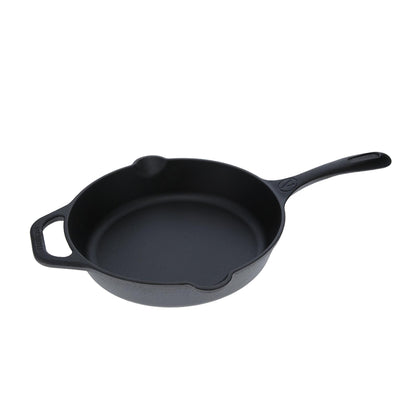
Victoria
$49.97
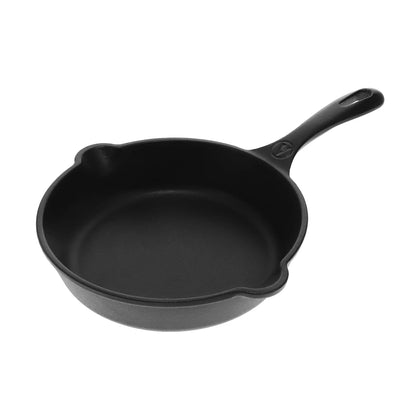
Victoria
$29.97
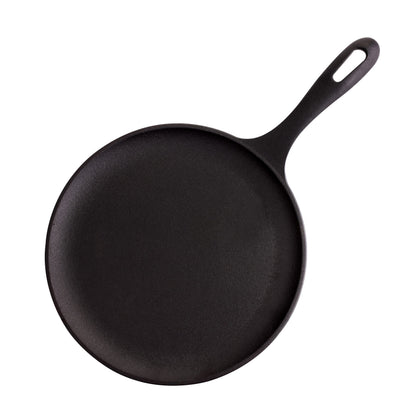
Victoria
$39.97
Victoria
$59.97
Victoria
$69.97
Victoria
$129.97
Victoria
$99.97
Victoria
$49.97
Victoria
$24.97

Email Us
sales@kitchenvirtue.com
No products were added to the Wishlist

[title]
[message]