




How to season a carbon steel pan (and keep it that way)
Posted by KITCHENVIRTUE

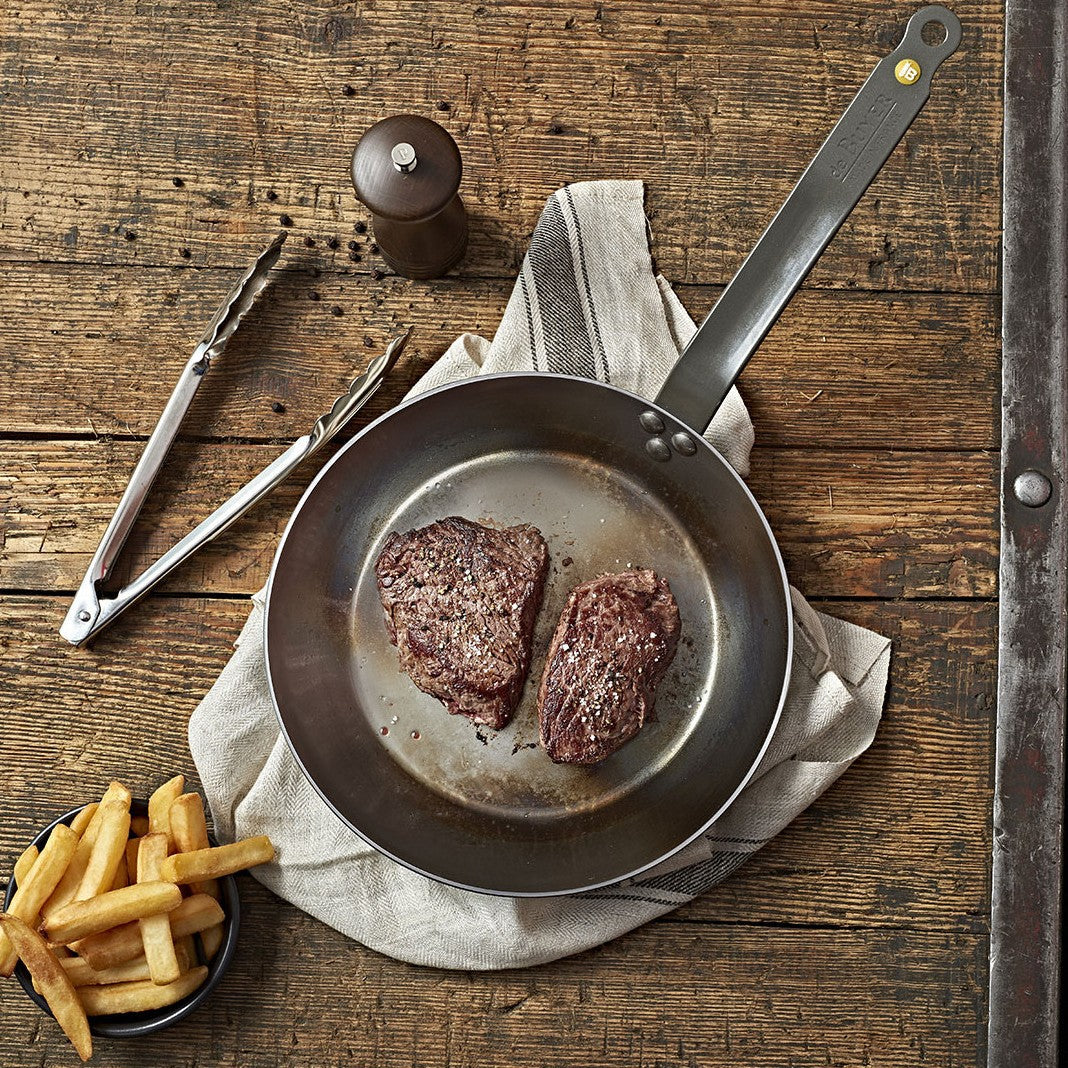
Carbon steel pans arrive looking wrong. They're grey, coated in a film of protective wax or oil, and nothing like the black, glossy pans you see in restaurant kitchens. The difference between the two is seasoning, and it's the part that scares people off carbon steel for no good reason. The whole process takes about twenty minutes.
What seasoning actually is
Seasoning is a thin layer of oil that has been heated past its smoke point until it bonds to the steel. Each layer is microscopically thin, slightly hard, and slightly non-stick. Stack enough of them and you get a natural cooking surface that rivals any coating, except this one can't flake off, and it repairs itself every time you cook with fat.
Seasoning a new pan
First, remove the factory coating. Wash the pan in hot water with dish soap and a scrubber, then dry it completely on the stove over low heat. Water is the enemy here, so make sure it's bone dry.
Next, add a very small amount of neutral oil. Canola, grapeseed, or sunflower all work. Wipe it around with a paper towel, then keep wiping until the pan looks almost dry. If you can see oil pooling, there's too much. Thin layers are the entire trick.
Heat the pan over medium-high until it starts to smoke, then let it smoke for a couple of minutes. You'll see the colour shift from grey toward brown. Turn off the heat, let it cool a little, and repeat the oil-wipe-heat cycle two or three more times. Open a window. By the end the pan will be somewhere between amber and brown, and it will darken toward black over the next few weeks of cooking.
Keeping it seasoned
The routine after cooking is short: rinse with hot water, scrub with a brush or non-metal scrubber, dry it on the burner, and wipe in a drop of oil while it's still warm. A little soap now and then won't destroy your seasoning, whatever the internet says, but soaking will. Never leave a carbon steel pan wet, and never put it in the dishwasher.
If food starts sticking or you see rust spots, don't panic. Scrub the spot back to bare metal, dry the pan, and run through a seasoning cycle or two. One of the best things about carbon steel is that there is no ruined state, only a pan that needs twenty minutes of attention.
The pan we'd start with
We stock de Buyer, who have been making carbon steel in France's Vosges mountains since 1830. The 10-inch Mineral B fry pan is the one we'd hand a first-timer: big enough for two steaks, small enough to handle easily, and built to be the pan your kids argue over someday.


