

🇨🇦 Free shipping over $95 · $9.99 flat rate under
Le Val d'Ajol, France. Ironwork since 1830
de Buyer have worked metal at Le Val d'Ajol in the Vosges for close to two hundred years, on the same ground and beside the same river. Twenty trades are still practised in the fabrication shops, from blacksmith and hammerer to riveter and boilermaker, and the French state lists the company as a Living Heritage Company.
Shop de Buyer
1830
the year metalwork began at Le Val d'Ajol, where the workshops still stand
20 trades
still practised in the fabrication shops, passed parent to child
Living Heritage
the French state label for a rare industrial skill kept alive
99% iron
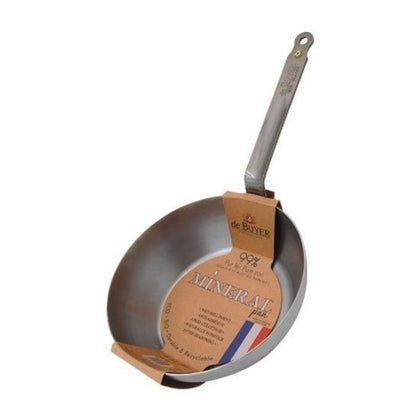
the Mineral pans, uncoated, shipped under a film of beeswax
de Buyer begin their own account of themselves with the river. “Downstream of the Combeauté river in the heart of Vosges, an industry is flourishing, born from a tale of heritage and skills passed down through the generations.”
Two hundred years ago that industry was a small smithy at Le Val d’Ajol turning out cutlery from metals mined in the surrounding hills. The workshops are still on the same ground. The region, as the company puts it, with its mountains, its character and its way of life, is integral to the brand’s history, and the claim is more than sentiment: the ore, the water and the workforce all came from within a few miles of the factory door.
What de Buyer are proudest of is not the pans but the people making them. Their own list of the trades still practised in the fabrication shops runs to twenty: stamper, polisher, blacksmith, shearer, cutter, hammerer, miller, turner, adjuster, groover, welder, riveter, boilermaker, shear former, programmer, marker, injector, draper, assembler, conditioner.
“Knowledge and expertise have been passed down via word of mouth, from parent to child, each new generation continuing to refine the different stages of the manufacturing process.” The apprenticeship is long, and the company compares it to the training a young chef goes through. Their summary of the whole business is four words: good hands make good products.
French chefs who cook on the tools tend not to call them de Buyer. They call them Faymont, after the hamlet the works stands in.
Those are the three words de Buyer put at the centre of the company, alongside a fourth they call handover, the sharing and passing on of skills.
Under passion sits an obsession with precision and their own statement of it: “nothing should affect the quality of what we produce, neither for professionals nor private individuals.” Under authenticity sits something harder to measure, the “humble and deep-seated desire to do well” that they say is engrained in everyone working in the fabrication shops.
Michel Roth, Meilleur Ouvrier de France and Bocuse d’Or 1991, has been an ambassador for the company for years. “De Buyer epitomises all the values I hold dear: faithfulness, simplicity, respect, work, craftsmanship, commitment to the local region. They also demonstrate excellence without pride.”
France lists de Buyer as an Entreprise du Patrimoine Vivant, a Living Heritage Company, the state label reserved for firms holding on to a rare industrial skill. They were also the first business in the French culinary sector to be awarded a CSR commitment label by AFNOR, the national standards body, at the exemplary level.
What sits behind those labels is worth knowing. The factory runs its own wastewater treatment plant to protect the Combeauté and the trout, Arctic char, grayling and huchen living in it. There are beehives beside the fabrication shops, kept partly as an indicator of environmental health and partly to help bee numbers across the Vosges. Non-stick pans are dismantled at end of life so the materials can be recycled. And the company makes the argument that the most environmental thing it produces is a pan nobody ever has to replace: “our products are made to last.”
There is one thing de Buyer’s own pages assume you already know, and most people buying their first carbon steel pan do not.
The Mineral pans are steel, given by de Buyer as ninety nine percent iron and one percent carbon, rolled to two or three millimetres. Nothing is applied to the surface, so there is no coating to wear through, no PTFE and no PFOA. They take and hold heat like cast iron at a fraction of the weight, and they sear the way stainless will not.
Every Mineral pan arrives coated in beeswax. That is transit protection against rust rather than a finish, and it washes off in hot water before you cook anything. Season it afterwards: a thin film of high smoke point oil, heat until it just smokes, cool, wipe out, repeat two or three times. The pan darkens as you use it, which is the seasoning building.
Then three rules. No dishwasher. No detergent, so deglaze while the pan is hot and rinse rather than scrub. And dry it on the burner before it goes away, with a wipe of oil if it is going to sit a while. Left wet, carbon steel will rust overnight.
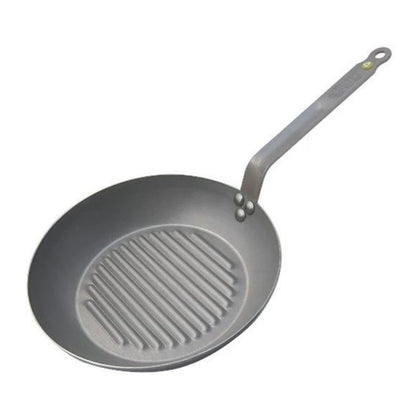
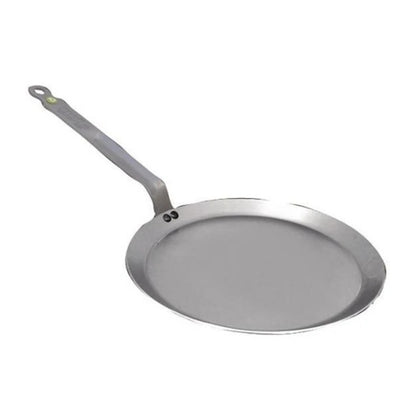
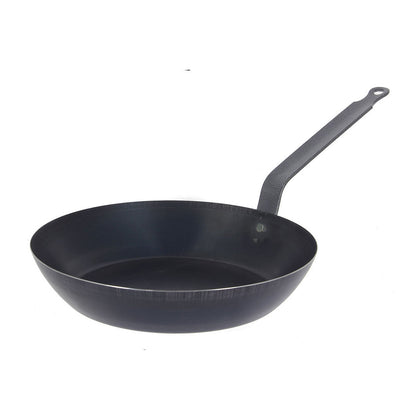
Mineral and Mineral B fry pans from eight to fourteen inches, the grill pans, the deeper country pans and the crepe pans. Mineral B Pro, which is the same steel with a cast stainless handle and a heat stop, and the one to buy if the pan is going into the oven properly. A Carbone Plus, the professional version, heavier again and shipped bare so you season it from scratch. And the Lyonnaise blue steel pans, thinner and quicker and well suited to crepes, blued for storage protection rather than for non stick.
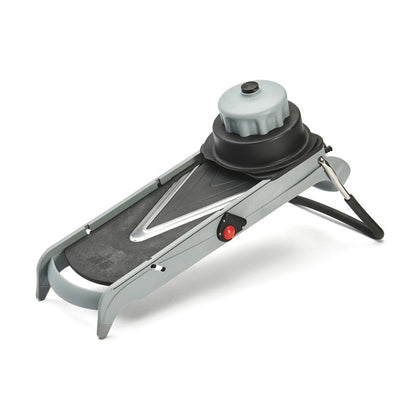
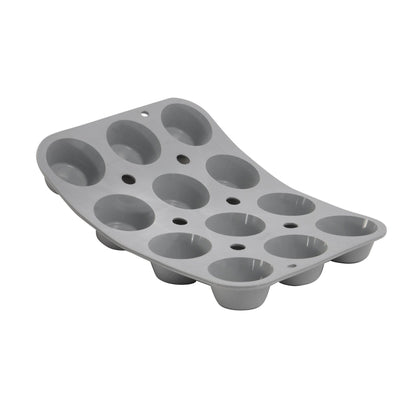
Beyond the iron we carry a slice of the rest: the Choc non stick pans, Priority stainless, the Elastomoule silicone moulds and baking mat, a baguette baking set, seafood shears, and the mandolines. Komi for a handheld, Kobra and Viper on the bench.
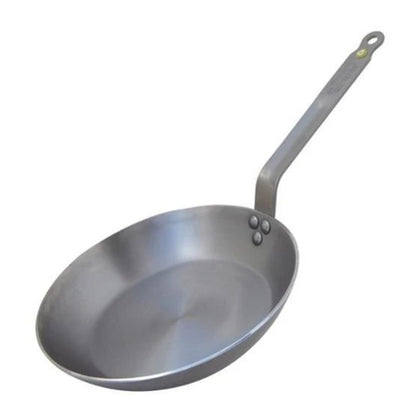
de Buyer
$139.97
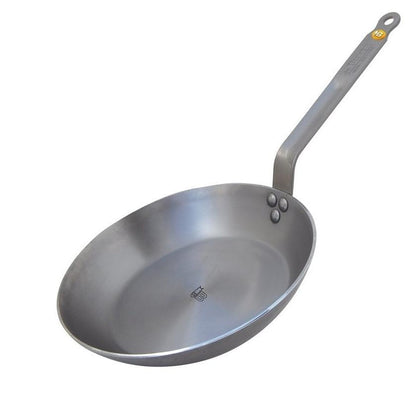
de Buyer
$164.97
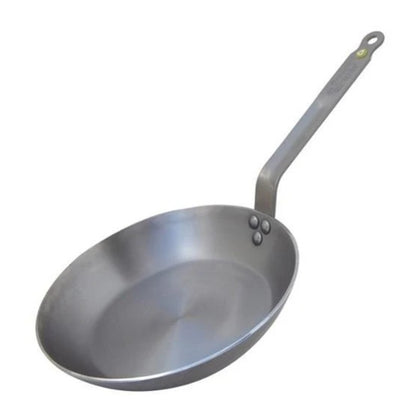
de Buyer
$99.97
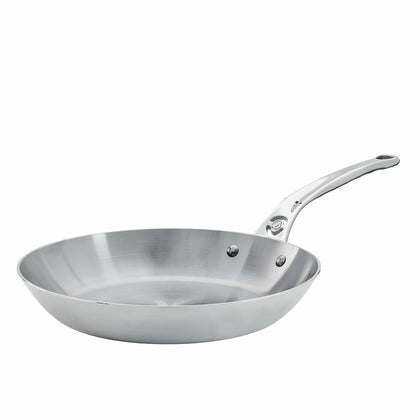
de Buyer
$199.95
de Buyer
$194.97
de Buyer
$204.97
de Buyer
$109.97
de Buyer
$79.97
de Buyer
$419.97
de Buyer
$72.95

Email Us
sales@kitchenvirtue.com
No products were added to the Wishlist

[title]
[message]